

Can You Build Muscle? Light Weights vs. Heavy Weights
Introduction
One of the most common questions in fitness is this: Can you build muscle using light weights?
The simple answer is yes. But there is more to it than that.
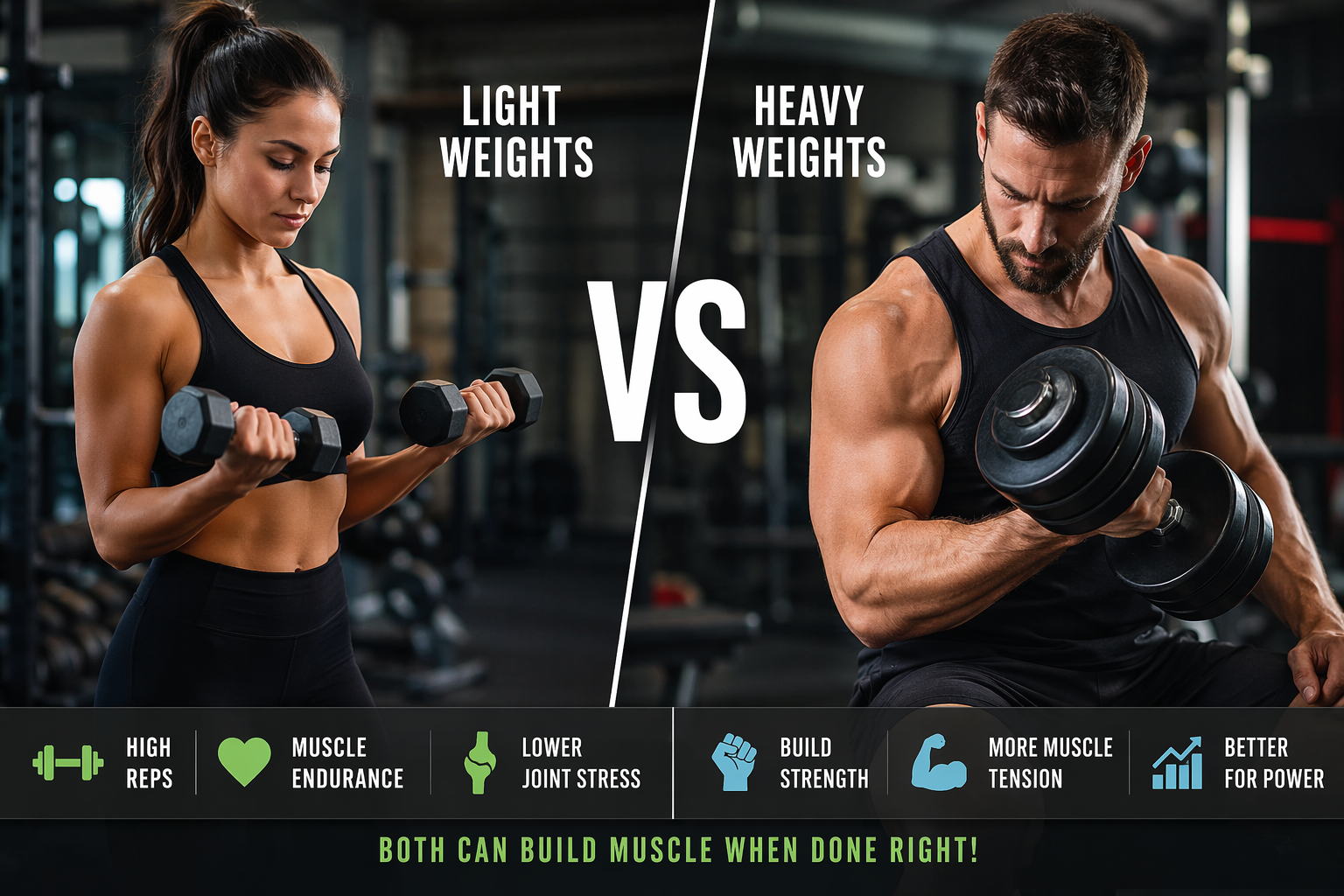
Both light weights and heavy weights can help you build muscle. The difference is in how they challenge your body, how many reps you perform, and what your training goal is.
Some people think heavy weights are the only way to grow muscle. Others believe light weights are safer and more effective. The truth is that both methods can work when used the right way.
In this article, you will learn:
how muscle growth happens
the difference between light and heavy weights
the benefits of each
when to use each style of training
how to choose the best option for your fitness goals
More Fitness Information!
Checkout the TruthFitnessTips page for helpful ideas.
Read up on the Blog post TreadmillvsStairclimber which is one of our most popular post.
What Causes Muscles to Grow?
Muscle growth, also called muscle hypertrophy, happens when your muscles are challenged enough to adapt. When you lift weights, your muscle fibers experience stress. As your body recovers, those fibers repair and grow stronger.
Three important factors help build muscle:
1. Muscle Tension
This is the force placed on the muscle during exercise. Heavy weights create a lot of tension quickly, but light weights can also create tension when you do more reps and keep the muscle working longer.
2. Training Close to Failure
This means doing enough reps so the last few are hard to finish with good form. Whether the weight is light or heavy, muscle growth happens best when the set feels challenging.
3. Consistency Over Time
You will not build muscle from one hard workout. Results come from training regularly, improving over time, eating well, and getting enough recovery.
Can Light Weights Build Muscle?
Yes, light weights can build muscle.
If you lift lighter weights for higher reps and push the set close to muscle fatigue, your muscles can still grow. This is especially true for:
beginners
people training at home
older adults
people coming back from injury
people focusing on form and control
The key is that the light weight must still feel challenging by the end of the set. If the weight is too easy and you stop long before your muscles are tired, muscle growth will be limited.
Example:
If you do bicep curls with 5-pound dumbbells for 30 reps and the last 5 reps are very hard, that can help stimulate muscle growth. But if you stop at 10 easy reps, that may not be enough.
What Counts as Light Weights?
Light weights are usually loads that allow you to perform 12 to 30 reps or more with good form.
For example:
3 to 10-pound dumbbells for shoulder exercises
bodyweight squats done for high reps
resistance bands with long sets
lighter kettlebells used with control and volume
Light weight is not defined by the number on the dumbbell alone. It depends on the exercise and the person lifting it.
A 15-pound dumbbell may feel light for a squat but heavy for a shoulder raise.
Can Heavy Weights Build Muscle?
Yes, heavy weights can also build muscle, and they are often used for that purpose.
Heavy weights usually allow you to perform about 4 to 10 reps before the set becomes difficult. This kind of training creates high muscle tension and also helps improve strength.
Heavy training is useful for:
building maximum strength
increasing power
training larger muscle groups
improving performance in sports
creating a strong foundation for long-term progress
Heavy weights are often more efficient because you can challenge the muscles in fewer reps.
What Counts as Heavy Weights?
Heavy weights are loads that feel difficult after fewer reps, often around 4 to 8 reps, sometimes up to 10.
Examples include:
a challenging barbell squat
a heavy dumbbell press
a deadlift that requires strong effort
weighted lunges with enough load to make each rep hard
Again, “heavy” is relative. What is heavy for one person may be light for another.
-
Light weights offer several advantages, especially for general fitness and home workouts.
1. Better for Learning Form
Lighter loads help you focus on movement quality. This is important for beginners who need to master basic exercises first.
2. Lower Joint Stress
Light weights can be easier on the joints, especially for people with pain, past injuries, or mobility limitations.
3. Good for Home Workouts
Not everyone has access to a full gym. Light dumbbells, bands, and bodyweight exercises can still produce good results.
4. Improves Muscular Endurance
High-rep training helps muscles work longer without tiring as quickly.
5. Safer for Recovery Days
Light training can be useful when your body needs a break from heavy lifting.
-
Heavy weights also have major benefits.
1. Builds Strength Faster
Heavy lifting is one of the best ways to improve raw strength.
2. Creates High Muscle Tension
That tension is a major driver of muscle growth.
3. Saves Time
Because heavy sets are hard, you may not need as many reps to challenge the muscle.
4. Helps Build Power
Heavy training improves your ability to produce force, which matters in sports and daily movement.
5. Supports Long-Term Progress
As you grow stronger, using heavier weights over time helps prevent plateaus.
When to Use Light Weights
Light weights are a great choice when:
you are new to resistance training
you are working out at home
you are recovering from injury
you want higher-rep training
you are focusing on posture, form, or control
you want less stress on the joints
Light weights can also be used as finishers at the end of a workout to fully fatigue the muscle.
When to Use Heavy Weights
Heavy weights are a better choice when:
your goal is to get stronger
you already have good form
you want to build more power
you are training major lifts like squats, presses, and deadlifts
you want to challenge your muscles in fewer reps
Heavy lifting should still be done with control. More weight is not better if your form breaks down.
Common Mistakes to Avoid
1. Thinking Light Weights Are Too Easy: Weights only work if the set becomes challenging.
2. Thinking Heavy Weights Are Always Better: Heavy lifting is useful, but bad form and poor recovery can slow progress or increase injury risk.
3. Ignoring Progressive Overload: Your body adapts over time. To keep growing, you need to increase the challenge by adding reps, adding weight, improving control, or reducing rest.
4. Training Without Purpose: Do not lift randomly. Match your weights, reps, and exercise choices to your goal.
5. Forgetting Recovery: Muscles grow between workouts, not just during them. Sleep, nutrition, hydration, and rest matter.
| Category | Light Weights | Heavy Weights |
|---|---|---|
| Rep Range | Usually 12–30+ reps | Usually 4–10 reps |
| Main Benefit | Muscular endurance, control, and joint-friendly training | Strength, power, and high muscle tension |
| Muscle Growth | Yes, if sets are challenging and close to fatigue | Yes, especially effective for size and strength |
| Best For | Beginners, home workouts, recovery, and form practice | Experienced lifters, strength goals, and major lifts |
| Joint Stress | Usually lower | Usually higher if form is poor or load is excessive |
| Workout Feel | Longer sets with more burn | Shorter sets with more force per rep |
| Good Strategy | Use for accessory work, endurance, and control | Use for compound lifts and strength building |
| Bottom Line | Effective when effort is high | Effective when form is strong |
