

Reasons Why You’re Gaining Weight Despite Your Efforts
Are you eating clean, working out, and staying consistent—yet the scale still won’t budge or worse, it’s going up? You’re not alone. Many people feel frustrated and confused when they’re doing all the “right” things but still gaining weight. Before you blame your metabolism or give up completely, let’s dive into the real reasons this might be happening.
Even when you’re doing everything “right,” the scale doesn’t always tell the full story. Progress isn’t only measured in pounds—it’s measured in strength gained, habits built, stress managed, and the determination to keep going when results don’t show up immediately. Your body is adapting, learning, healing, and strengthening, even when you can’t see it yet. Stay consistent, stay patient, and give yourself credit for every effort. Success takes time, but every healthy choice you make is moving you forward.
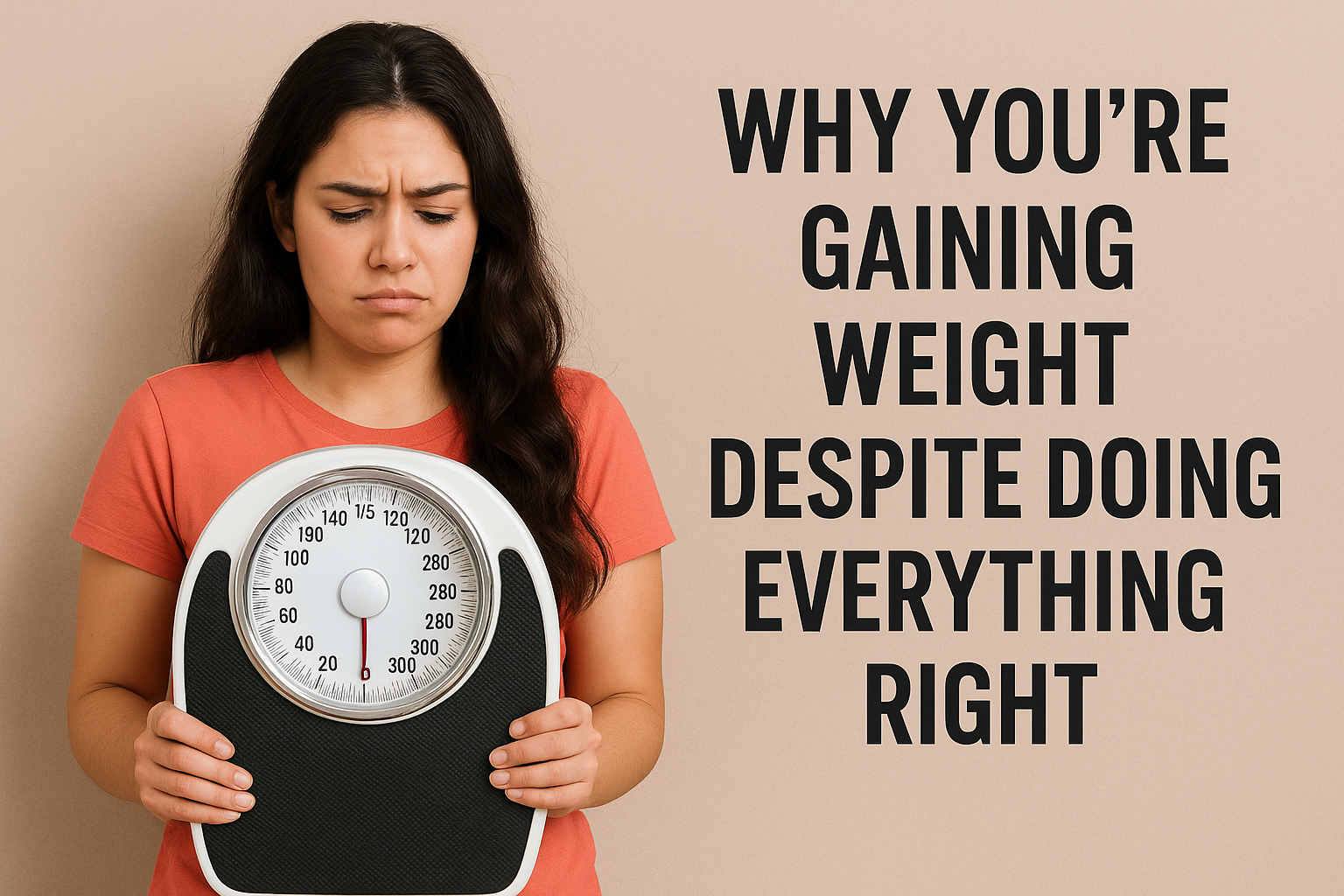
Always take your fitness journey one day at a time. Never rush the process or expect results to appear in a week. Make fitness apart of your daily routine, you do not have to workout for 1 hour or 2 hour a day . 20 minutes of something will do the job!!! (Stay Fit).
1. You’re Gaining Muscle (and That’s a Good Thing)
Muscle weighs more than fat—so when you’re lifting weights or doing resistance training, the scale might climb even as your body gets leaner. Pay attention to how your clothes fit, your energy levels, and your strength. Use a tape measure or take progress photos. The number on the scale doesn’t always tell the full story.
⸻
2. Stress Is Working Against You
Even if your workouts and meals are on point, chronic stress can cause weight gain—especially around your belly. That’s because stress increases cortisol, a hormone that promotes fat storage. If you’re constantly under pressure, not sleeping well, or dealing with emotional burnout, your body might be holding onto weight as a defense mechanism.
Pro Tip: Add stress-reducing activities like deep breathing, stretching, meditation, or even a daily walk in nature to support your hormones and mental health.
⸻
3. You’re Not Eating Enough
Yes, eating too little can lead to weight gain or a plateau. When you severely restrict calories, your body goes into “survival mode” and slows down your metabolism. This can lead to muscle loss, fatigue, and eventually fat gain when you increase your intake again.
Fix It: Focus on fueling your body with enough calories to support your lifestyle and workouts. Quality matters—aim for protein, healthy fats, complex carbs, and fiber-rich vegetables.
⸻
4. Hidden Calories Are Sneaking In
You may be tracking your meals and watching portions, but what about liquid calories or “healthy” snacks? Protein shakes, nut butters, and granola bars add up fast. Even cooking oils, salad dressings, or post-workout smoothies can sneak in 200–400 extra calories you weren’t counting.
Tip: Use a food journal or app for a week to double-check your intake. Sometimes small changes make a big impact.
⸻
5. Your Workouts Are Too Repetitive
If you’ve been doing the same workout for months, your body has likely adapted. This leads to fewer calories burned and slower results. While consistency is key, variety is what keeps your body guessing and progressing.
What to Do: Switch up your routine. Add strength training if you’ve been focusing on cardio, or increase intensity with intervals and circuit training.
⸻
6. You’re Retaining Water
Water retention can cause sudden or steady weight gain—and it has nothing to do with fat. Hormonal shifts (like your menstrual cycle), increased sodium intake, or muscle recovery after a tough workout can cause your body to hold onto water.
Solution: Stay hydrated, get plenty of potassium (think bananas, avocados, and sweet potatoes), and avoid processed foods high in sodium.
⸻
7. Medical Conditions or Medications
Certain conditions like thyroid disorders, PCOS, or insulin resistance can cause unexpected weight gain. Medications like antidepressants, birth control, or steroids may also interfere with your body’s ability to lose weight.
If You Suspect This: Talk to a doctor or registered dietitian. They can run tests, adjust medications, or offer tailored solutions based on your health.
⸻
Trust the process. Stay consistent. And remember: your health is more than a number.
⸻
Final Thoughts: Weight Gain Isn’t Always a Sign of Failure
If you’re gaining weight despite doing everything right, don’t panic. Your body may be going through positive changes that the scale doesn’t show. Fat loss, muscle gain, water retention, and even hormonal balance all play a role in your weight.
Remember: The scale is just one tool. Focus on energy, strength, confidence, and consistency.
Want personalized help reaching your fitness goals?
Visit www.truthfitness.org or contact us at 404-434-9729 to book your customized training session with an expert who gets results.
